 English
 Polski
 Deutsch
 Türk dili
 Pусский
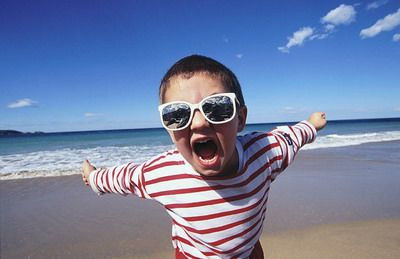
Children need to play outside
Spending time outdoors is an essential dimension of your child's development. What's more, outdodr games and sports, walks and picnics in the park are great opportunities to get closer to and interact with your children.
Theses activities allow them not only to learn to appreciate nature, get some fresh air and compensate for the time spent in front of a screen by relaxing outside, but alos to practice the physical sctivity they so badly need. In addition, they strengthen the immune system and promote restful sleep and a positive state of mind. According to a study, children who spend more time outdoors are less likely to contract myopia.
In addition,your child's body needs to be exposed to the sun to produce vitamin D, which plays a crecial role in bone development.

The dangers of sun exposure
However beneficial it may be, the time spent outside also carries a risk of overexposure which must be taken into account.
95 to 97% of UV rays that reach the Earth's surface penetrate deep into the skin, where they can contribute to the formation of skin cancer and accelerate skin aging. Over time, overexposure to the sun can also damage the eyes and lead to eye diseases such as photokeratitis, photoaging and cataracts.
As a parent, you obviously want what is best for your children and may be reluctant to encourage them to play outside if it is dangerous. The good news is that you can get the best of both worlds with the right UV protection. To understand what this consists of, you must first know what UV readiation is.

What is ultraviolet radiation?
The sun emits visible light, heat and ultraviolet readiation(UV). UV rays divided into three categories: UVA, UVB and UVC.
The sun's rays pass through the atmosphere, then the ozone layer, water vapor, carbon dioxide and oxygen absorb all UVC and around 90% of UVB. Only UVA and a small pencentage of UVB reach Earth. UV rays are present daily, throughout the year, in every season and even in cloudy weather.
They are measured in naometers(nm) and cover wavelengths between 100 and 400 nm. It's important that you keep this in mind when reading the chapter on UV protection standards for spectacle lenses.

Why are children more sensitive to the ultraviolet light?
Your child may experience painful sunburn after spending the day outdoors. This is the direct result of prolonged exposure to UV. We also know that UVA and UVB can cause skin cancer 3 and eye disease - and children are more vulnerable to the harmful effects of UV rays for several reasons:
- Children spend more time outdoors. They are average three times more exposed to UV than an adult. 40 to 50% of the UV exposure time accumulated until the age of 60 will occur during the first 20 years of your child's life.
- Melanin is the pigment that naturally protects the skin. It effectivly absorbs light and is able to dissipate UV rays absorbed by the skin. However, children's skin contains less melanin.
- The lens, that protects the eyes, is more transprant in children. Therefore, it transmits more than 75% of UV rays in children under 10 years against only 10% in those over 25 years.
Children are more sensitive to UV rays. Make sure you know how to protect your child's skin and eyes.

Protect your child from UV rays
Studies show that children's sun protection behavior and habits depend heavily on the example and advie given by their parents, even when they grow up and start to make their own dicisions. This is great news for parents!!!
Persist, even if your child finds that the sunglasses are not cool and even if coating your little one with sunscreen is combat. Ultimately, your recommendations can influence your child's overall health and make a difference.
The UV index was developed to help users effectively protect themselves from UV rays. Make it habit to check this out, especially if your child is going to be spending more time outside than usual, for example on a school trip. You can get the UV index for your area on a local channel or weather site or by doing a quick internet search. Use the table below to guide you:

Use the UV index to protect your child from harmful UV rays, but remember that reflective surfaces such as sand, water and snow increase UV exposure, so special protection is required in their presence.
Don't forget to protect your child's eyes!
You've probably read some parent magazines, websites, children's health blogs, and social media posts that focus on protecting the skin. It's an incredible awareness. However, we tend to overlook the fact that overexposure to UV can also damage the eyes.
As mentioned proviously, the lens of children lets in more UV rays than that of adults. The sun can cause serious damage early in life even if it does not appea until later in the form of cataracts(responsibl for 48% of cases of blindness in the world) or photoaging.
In addition to the long-term damage, your child may also suffer from sunburn from the eye, which can be very painful. Of course, prevention is better than cure.


